


High-net-worth investors in Chicago are often given conflicting advice about portfolio construction. Some wealth management firms emphasize traditional, long-only investment strategies focused on pre-tax returns. Others highlight tax-aware investing approaches designed to manage taxes alongside market exposure.
So which approach is better?
The reality is that neither strategy is universally “better.” The right answer depends on your income level, where your assets are held, your tax exposure, and your long-term planning goals. As Chicago-based fiduciary advisors, we’ve seen both traditional and tax-aware strategies work well—and fail—when applied in the wrong context.
Below is a practical comparison to help you understand how these approaches differ, when each may be appropriate, and how they can work together as part of a coordinated wealth management plan.
Understanding Traditional Portfolio Management
Traditional portfolio management focuses primarily on generating competitive pre-tax investment returns through diversified portfolios aligned with an investor’s risk tolerance and time horizon.
This approach typically includes:
- Long-only equity and fixed-income investments
- Buy-and-hold or periodically rebalanced strategies
- Emphasis on tax-deferred accounts such as 401(k)s and IRAs
- Tax planning addressed separately from portfolio construction
For many investors, traditional portfolio management is both effective and appropriate—especially when most wealth is accumulated inside qualified retirement accounts where taxes are deferred or eliminated.

Limitations for High-Income Investors
As wealth grows, limitations can emerge. Once retirement accounts are fully funded, additional savings typically flow into taxable brokerage accounts, where investment gains, dividends, and interest are subject to ongoing taxation.
For investors in higher tax brackets, this can create a meaningful “tax drag,” reducing after-tax wealth accumulation over time—particularly in portfolios with frequent trading activity or regular taxable distributions.
What Is Tax-Aware Investing?
Tax-aware investing integrates tax considerations directly into portfolio management rather than treating them as an afterthought. The goal is not to eliminate taxes, but to manage the timing and character of taxable income in a way that may improve long-term after-tax outcomes.
Common elements of tax-aware investment approaches may include:
- Systematic tax-loss harvesting
- Gain deferral strategies
- Asset location planning (matching investments to account types)
- Coordination between investment management and tax planning
Some sophisticated strategies may involve long/short positioning or partnership structures designed to manage taxable income more efficiently. These approaches are complex, highly regulated, and not appropriate for all investors.
When structured properly and used in the right circumstances, tax-aware strategies may help certain investors better align investment outcomes with their overall tax and planning objectives.
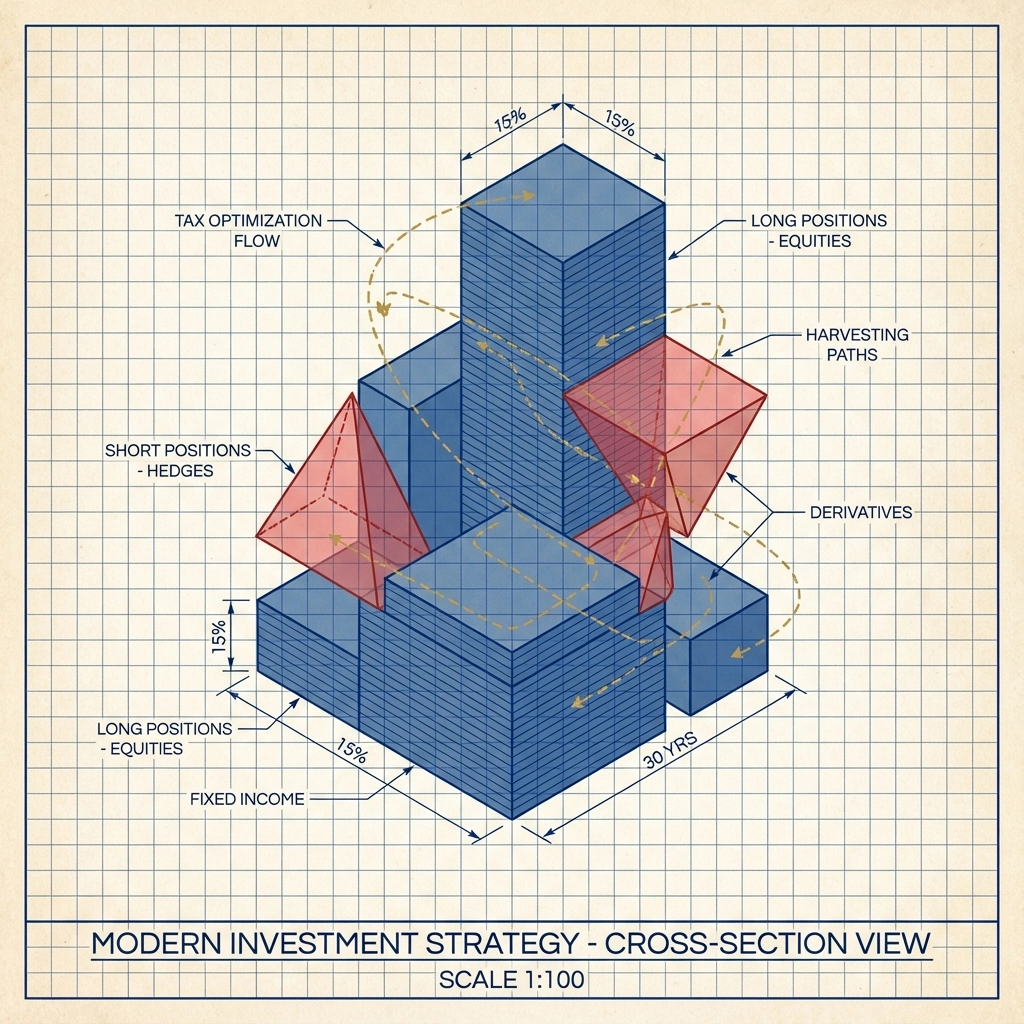
Key Differences Between the Two Approaches
Tax Loss Utilization
Traditional portfolios are generally limited to using capital losses against capital gains, with only a small amount eligible to offset ordinary income each year. Certain tax-aware strategies may, in limited circumstances, allow losses to be treated differently under IRS rules, subject to strict requirements and limitations.
Timing of Taxable Gains
Traditional portfolios may trigger gains through rebalancing or active management. Tax-aware strategies often seek to manage when gains are recognized, potentially deferring taxes while maintaining market exposure.
After-Tax Focus
Traditional portfolio management prioritizes pre-tax performance. Tax-aware investing focuses on after-tax results, recognizing that taxes are one of the largest long-term drags on investment returns for high-income households.
Complexity
Traditional strategies are generally simpler to implement and monitor. Tax-aware investing requires greater coordination, ongoing compliance oversight, and careful execution to avoid unintended tax or regulatory consequences.
When Traditional Portfolio Management Makes Sense
Traditional portfolio management is often appropriate if you:
- Primarily invest through tax-deferred retirement accounts
- Have moderate taxable income
- Prefer simplicity and transparency
- Do not have significant taxable investment assets
In these cases, the additional complexity of tax-aware strategies may not provide meaningful incremental benefits.
When Tax-Aware Investing May Be Worth Considering
Tax-aware strategies may be more relevant for investors who:
- Hold substantial assets in taxable brokerage accounts
- Face high marginal federal and state tax rates
- Experience uneven income, liquidity events, or large capital gains
- Meet applicable investor qualification requirements
Even then, these strategies should be evaluated carefully and implemented only as part of a broader financial plan (Financial Planning for High Net Worth Families).

Why Most Investors Benefit from a Blended Approach
For many high-net-worth families, the most effective solution is not choosing one strategy over the other, but combining them thoughtfully:
- Foundation layer: Maximize tax-advantaged accounts such as 401(k)s, IRAs, and HSAs
- Taxable layer: Apply tax-aware principles where assets must be held in taxable accounts
- Planning coordination: Align investment decisions with tax, estate, and cash-flow planning (part of our Wealth Management Services)
This integrated approach helps ensure that investment strategy supports long-term wealth objectives rather than operating in isolation.
The Importance of Professional Implementation
Sophisticated strategies—especially those involving tax-aware investing—require careful implementation. Poor execution can increase audit risk, create compliance issues, or produce results that fail to justify the added complexity.
When evaluating a Fiduciary Financial Advisor in Chicago, look for professionals who:
- Operate under a fee-only fiduciary standard (Fee-Only Financial Advisor Chicago)
- Coordinate closely with tax and legal professionals
- Clearly explain risks, limitations, and trade-offs
- Have experience working with high-net-worth families
At Virtue Asset Management (About Virtue Asset Management), our role is to help clients evaluate these options objectively and determine which strategies align with their specific circumstances, risk tolerance, and long-term goals.

Making an Informed Decision
When deciding between traditional and tax-aware approaches, consider:
- Your current and projected tax exposure
- Where your assets are held
- Your tolerance for complexity
- Your long-term planning objectives
The goal is not to minimize taxes at all costs, but to manage taxes thoughtfully while pursuing disciplined, long-term investment growth.
If you’re evaluating how these approaches fit into your overall wealth management strategy, working with an experienced fiduciary advisor can help ensure decisions are made with clarity and perspective.
This content is for informational and educational purposes only and should not be construed as investment, tax, or legal advice. Tax-aware strategies are complex, subject to IRS rules and limitations, and may not be suitable for all investors. Individual results vary based on circumstances. Investors should consult qualified professionals before implementing any strategy.